
A screwdriver going in easily inside the drywall might sound good, but it’s a potential sign that your drywall has water damage. Wet drywall is a nightmare for homeowners in Denver. It often comes out with bad consequences.
A heavy rain, thunderstorm, or a ruptured drainage system can seep water into your drywall. As a result, you start to notice mild signs of wet drywall like ring stains, a musty smell, and wall softness.
However, that’s not all! If overlooked, wet drywall can result in cracked paint, bubbled wallpaper, and corrosion of metal pipes.
However, the question remains: does wet drywall always need to be replaced? Well, only sometimes.
Read further in my detailed guide about the causes, potential damage, and advice on when to replace wet drywalls in Denver.
Common Causes of Wet Drywall
Water leakage is the most common cause of wet drywalls. However, Denver’s weather also plays a significant role in water damage.
Let’s explore the common causes.
[wpdatatable id=17]
Potential Damage of Wet Drywall
A wet drywall may sound like a minor issue, only causing a musty smell. However, it leads to long-term damage if left untreated.
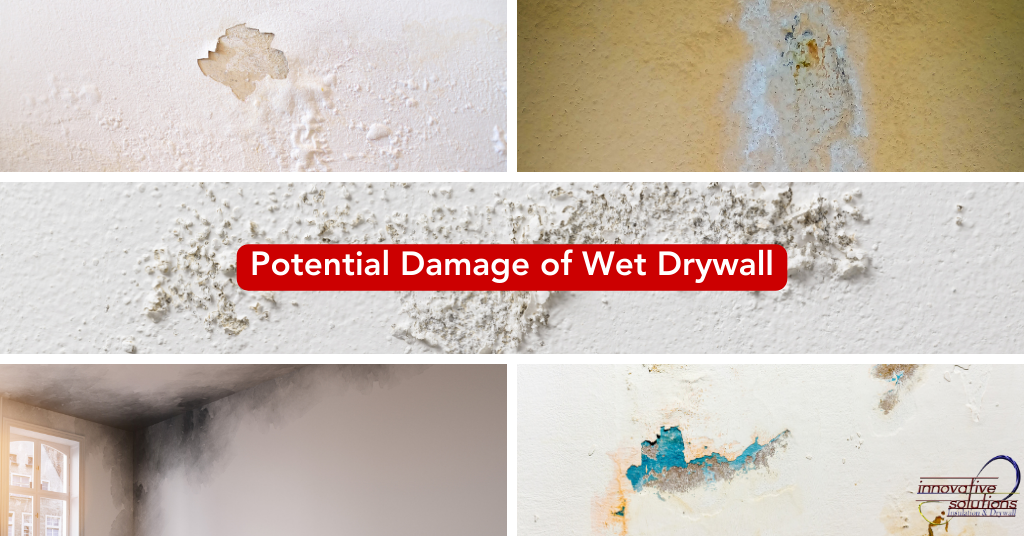
- Mold grows in wet drywall, making you and your family sick with respiratory problems, allergies, and skin irritation.
- Moisture under drywall spreads and causes structural damage.
- Over time, wet drywall weakens and may collapse, especially in high-weight zones like basements and ceilings.
- Wet drywalls damage electrical wiring and insulation. It can create electrical short circuits and fire hazards.
- Visible water damage significantly lowers your home’s resale value.
- Moisture from wet drywall peels out paints and creates bubbles inside wallpapers.
- Mold growth and damaged insulation increase heating and cooling costs.
Now you might be thinking, Does drywall always need to be replaced if any of these issues arise? Yes, however, it also depends on the severity of the water damage.
A professional drywall company in Denver like ISID can carefully assess water damage and suggest the best repair or replacement options.
Tips for Properly Drying Wet Drywall
Drying the wet drywall is the first step to avoid long-term water damage. However, improper technique will not eradicate the issue; subsequently, your drywall must be replaced.
I have three professional tips for properly drying wet drywalls.
- Solve the underlying cause of water damage, like leakage and condensation, before drying your drywall.
- Rent high-powered air movers and dry the wet area with constant air circulation. Open windows if possible (avoid cold drafts in winter).
- Set dehumidifiers at 50% to reduce moisture in the air. Cover the walls with plastic sheeting for efficient dehumidification.
- Use heaters in winter to speed up the drying process.
- Remove furniture and baseboards for better airflow at the drywall base. Remove cracked and peeling paints and repaint them after drying.
Looking for Drywall or Insulation Services in the Denver Area and Beyond?

Mold Growth on Wet Drywall
Mold growth is the most common primary issue that arises from wet drywalls. The increased humidity and moisture buildup is a suitable environment for mold growth.
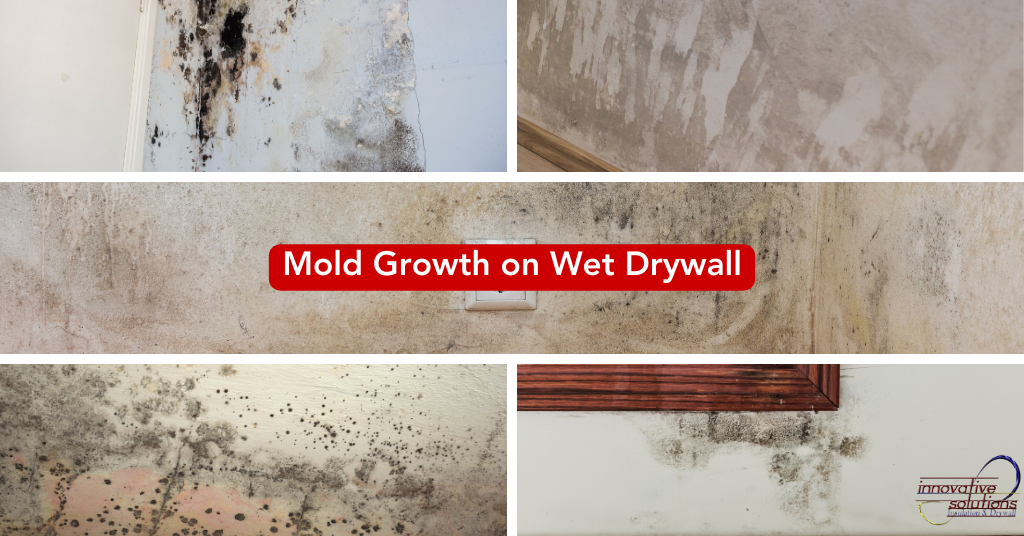
However, it doesn’t only affect your drywall. It has several health hazards that are listed below:
- Coughing, sneezing, and respiratory infections
- Eyes and skin irritation
- Allergic reactions and asthma
Being an expert, I would advise always addressing the water leakage promptly, before it leads to mold growth and bad health.
I would suggest don’t troubleshoot mold growth yourself. Get help from professionals. Our expert team at ISID can help you deal with it.
Inspecting Wet Drywall for Structural Integrity
Consistent water seepage and mold growth under drywall results in long-term structural integrity loss. You must read the signs immediately and analyze if your wet drywall needs replacement.
Here are three signs to look out for;
- Press gently or insert nails to identify soft spots and mushiness.
- Look out for bulges and bents for compromised structure.
- Spot large cracks and paint peels over drywall.
Repairing or Replacing Wet Drywall: Exploring Options
After inspecting wet drywall for structural integrity, you conclude if your wet drywalls need replacement or not. Since lost structural integrity can result in falls and accidents, I recommend contacting professionals.
However, if you still want to analyze it yourself. Here is my expert insight.
When Wet Drywall May Need to be Replaced
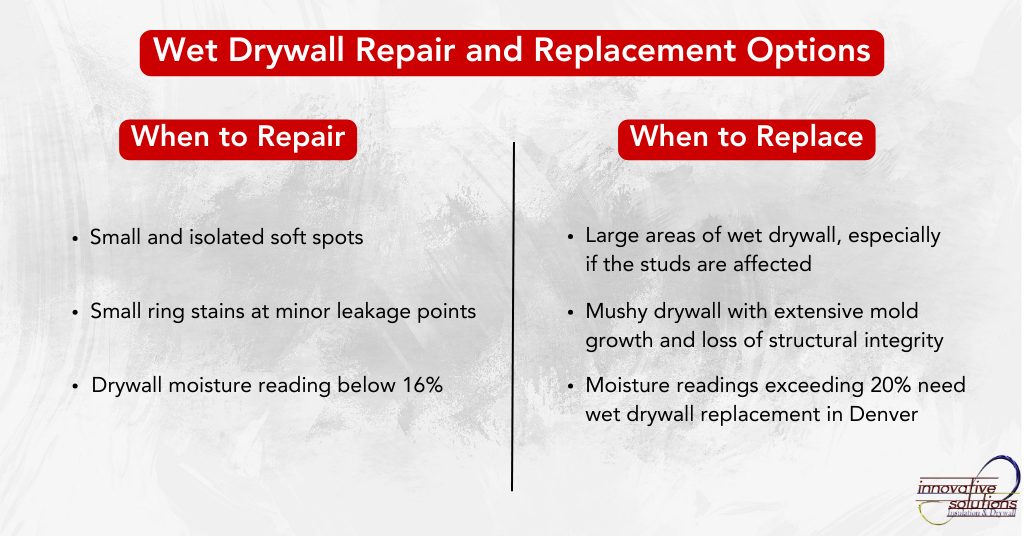
You don’t have to replace your wet drywall over small water damage. You can patch the affected area yourself and repaint it.
However, few signs indicate that your drywall can’t hold more and needs immediate replacement.
- Look for discolored areas on the drywall surface. Mold can be black, green, white, or brown.
- Gently press the wet drywall. If it feels mushy, immediately replace it.
- Wet drywall conducts electricity and increases fire risk. If the moisture source is near electrical connections, replace the drywall without delay.
- Invest in a moisture meter. Readings above 20% suggest replacement.
If drywall professionals in Denver suggest replacement on a lower reading, verify it with experienced and professional drywall companies and then decide.
Our team at ISID works on a set list of protocols before we advise any of our customers.
Cost Implications of Replacing Wet Drywall
The cost of wet drywall replacement in Denver is variable. It will vary between $500 to $2000 depending on 4 key factors.
- The bigger the damage the costlier the drywall replacement
- Mold removal and sanitization add up to a significant sum in your replacement cost
- Removing fixtures to access drywall increases labor resulting in additional labor costs.
- Disposal fees and potential permits in your area.
Finding a Professional to Address Wet Drywall Issues:
Any drywall repair service may address minor drywall damages. However, repairing and replacing wet drywall is a bit tricky. I suggest always considering the following points before choosing a wet drywall repair service in Denver.
- Check for experience and reviews related to wet drywall repair and replacement.
- Look for someone equipped with moisture meters who can accurately analyze the damage.
- Choose a wet drywall repair professional with experience and certifications in mold remediation.
Preventative Measures to Avoid Wet Drywall Issues in the Future:
Wet drywall is inevitable in areas with heavy rainfall and a humid environment. Moreover, leakages can also happen.
However, some preventive steps can help you avoid wet drywall issues in the future and save large replacement costs with minor repairs.
- Regularly inspect pipes, hoses, and appliances for leaks.
- Use exhaust fans for proper ventilation in kitchens and bathrooms to avoid condensation.
- Maintain indoor humidity levels between 12% to 15% with a dehumidifier.
- Set up a proper drainage system around your foundation to prevent water from seeping into the basement or crawl space.
People Also Ask
Does Wet Drywall Always Need to Be Replaced?
Wet drywall may not always require replacement. Factors like the severity of water damage determine the need. Consult professionals for proper assessment.
What Are the Common Causes of Wet Drywall?
Common causes include leaks from compromised roofs or plumbing, flooding, high humidity, condensation, and defective roof flashing.
What Are Potential Damages of Wet Drywalls If Left Untreated?
Untreated wet drywall can lead to mold growth, structural damage, electrical hazards, decreased property value, and increased heating/cooling costs.
How Can I Prevent Wet Drywall Issues in the Future?
Regularly inspecting for leaks, ensuring proper ventilation, maintaining indoor humidity levels, and setting up drainage systems can help prevent wet drywall issues.
By now, you are well-equipped with the knowledge to answer ‘Does wet drywall always need to be replaced’.
You can deal with minor wet drywall issues as early as possible. Look for the early signs and handle the root cause of wet drywalls before repairing or replacing them. Or you can ask professionals like ISID for proper assessment ISID. Our team will guide you well.