
Basement Ceiling Insulation in Denver
Basement ceiling insulation in Denver is installing insulating materials between the floor joists of a basement ceiling. This insulation aids in creating a barrier that reduces the transfer of heat, sound, and moisture.
Denver’s cold winters make basement ceiling insulation essential since it keeps your basement warmer in winter and cooler in summer. It also makes the upper living spaces comfortable by controlling moisture and preventing mold growth.
Types of Insulation Material Commonly Used in the Basement of Denver Homes
There are a few types of Insulation material used in Denver according to the suitability of the house.
[wpdatatable id=19]
Benefits of Insulating a Basement Ceiling
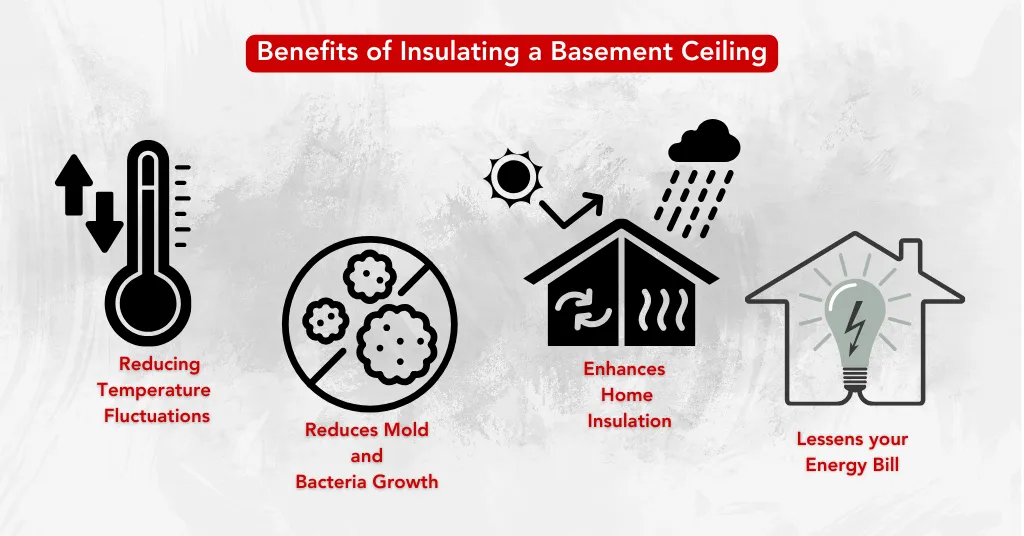
Insulating your basement ceilings has multiple benefits.
- Reducing Temperature Fluctuations
Due to temperature swings, basement ceiling insulation in Denver is exposed to different kinds of temperatures. They often become too warm in summer and too cold in the winter due to their location below ground.
If you’re someone who stores perishable items like wine in your basement storage, a stable temperature is important. Basement ceiling insulation is an effective solution to reduce temperature fluctuations.
- Reduces Mold and Bacteria Growth
When moisture is present, mold and bacteria do not take a second to grow, especially in a basement. This makes storing delicate items like clothing or food risky. Insulating your basement will reduce the risk of infestations and protect your belongings.
- Enhances Home Insulation
Properly insulating your basement helps to make sure there is no unnecessary heat loss. During winter, 20% of the heat in your house can escape through floors. By installing basement ceiling insulation, heat loss and overall energy of your house improves.
- Lessens your Energy Bill
A finely insulated home means you will get a lower energy bill at the end of the month. Energy prices are extremely high and fixing your basement ceiling insulation might just be the right thing you need to lessen your energy bill.
If you are looking for basement ceiling insulation services in Denver that are both beneficial and aesthetic, then we have just the right services for you.
Innovative Solutions Insulation and Drywall provides the experience and attention to detail that you need in your house. So wait no more and contact us for our exceptional services.
Looking for Drywall or Insulation Services in the Denver Area and Beyond?
Common Issues with Poorly Insulated Basements
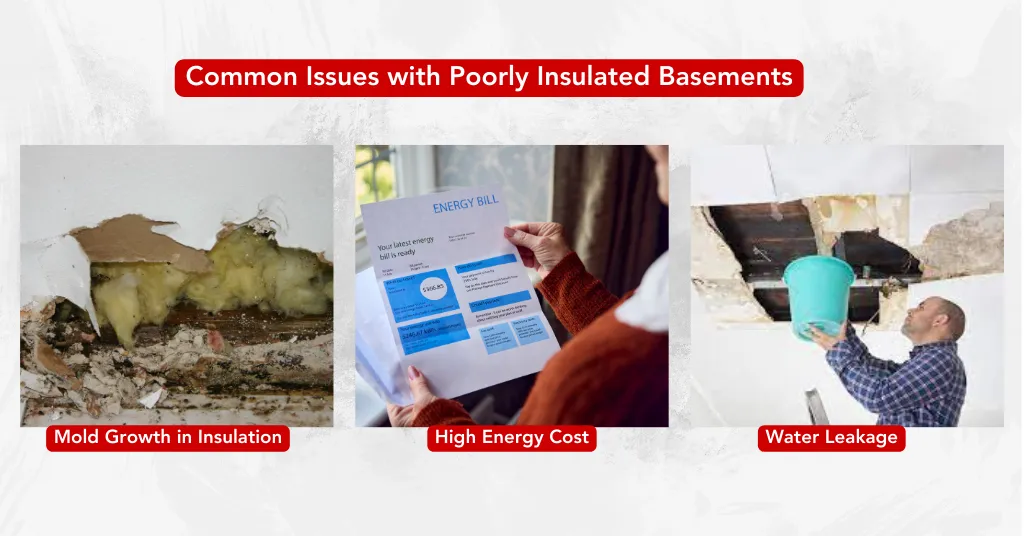
The city of Denver is not unknown to some of the common issues faced when a person has poorly insulated basements. Let’s know about them and know how to determine when a basement needs ceiling insulation.
Mold Growth:
Mold is formed by certain fungi. Basements are naturally moist environments, and without proper insulation, the chances of mold growth increase. Mold growth not only damages material but also causes serious health hazards.
If your ceiling has mildew growth, it is better to get it cleaned and insulated so no further damage is caused.
High Energy Costs:
Without proper insulation, heating and cooling systems at your house in Denver are going to take up much more energy. This results in higher energy consumption and increased utility bills.
If you notice your utility bill costs are higher than expected, it might be due to heat loss through an uninsulated or badly insulated ceiling. That is your sign to get a new basement ceiling insulation in Denver installed.
Water Leaks:
An uninsulated basement can lead to condensation, especially in climates like Denver where there is a difference between the temperature between the floors and the basement. The moisture that builds up causes pests, mold, and other damages to grow immediately.
Check for water stains or moisture in your basement ceiling, if found, get a new basement ceiling insulation and prevent it from worsening.
Read More: Attic Insulation Removal in Denver
Factors to Consider While Buying Insulation Material
Here is a list of a few things to consider while buying basement ceiling Insulation material in Denver. You can always consider the National Insulation Association (NIA) for materials approved to be used in Insulation.
- R-value: It measures the insulation’s strength to resist heat flow. The higher the value, the better the insulation.
- Cost: Keep both current costs and long-term costs in mind. Higher efficiency means more initial expense.
- Environment Impact: Go for eco-friendly material with a low environmental damage footprint and energy preservation.
- Moisture Resistance: Insulation material should show resistance to moisture to prevent mold and mildew from growing.
- Fire resistance: To ensure safety, fire resistance is an important factor to consider.
- Sound Proofing: Select the material that reduces noise between the basement and upper floors.
- Durability: Choose long-lasting materials that maintain their performance over time.
When planning basement ceiling insulation in Denver, it’s important to consider local regulations and standards. The Construction Department in Denver provides guidelines and requirements to ensure that all insulation projects meet safety and efficiency standards.
Before starting your insulation project, check with the Construction Department to ensure if any permits are needed.
Read More: How Thick is R 30 Insulation in Denver
Common Mistakes to Avoid When Insulating a Basement Ceiling
According to the EPA, homeowners can reduce heating and cooling costs by an average of 15% by air-sealing their homes and installing insulations. Here are a few mistakes to avoid when installing basement ceiling insulation in Denver.
- Ignoring moisture control
- Adding extra insulation before cleanup
- Ignoring gaps
- Poorly air-sealing
- Using incorrect insulation material
- Blocking airflow
- Missing sealing air leaks
It is also not necessary to always change your insulation. Regularly check your moisture, mold, or damage. You can easily replace compromised sections and seal gaps, ensuring that the basement ceiling insulation in Denver remains dry.
Read More: Cellulose vs Fiberglass Insulation
People Also Ask
What Insulation Should I Use for a Basement Ceiling?
Fiberglass batts, spray foam, and rigid foam boards are ideal for basement ceilings. They offer moisture resistance, soundproofing, and temperature control, making them suitable for Denver’s climate.
What Is the Best Insulation for a Basement?
Spray foam insulation is the best for basements. It expands to fill gaps, providing an airtight seal that’s perfect for Denver’s varying temperatures and moisture levels.
What Is the Best Ceiling for a Basement?
The best ceiling for a basement is one with insulation like fiberglass batts or spray foam, which reduces heat loss, controls moisture, and improves energy efficiency.
Which Insulation Is Best for a Ceiling?
Fiberglass batts are best for ceiling insulation. They’re affordable, effective at reducing heat transfer, and widely used in Denver basements to maintain consistent temperatures.
Why Is Insulating a Basement Ceiling Important?
Insulating a basement ceiling reduces temperature fluctuations, prevents mold growth, lowers energy bills, and improves overall home insulation, especially crucial in Denver’s climate.
The changing climate change in Denver increases the need for effective basement insulation.
Basement ceiling insulation in Denver is easy since there are many local experts and resources you can use in Denver by searching that are cost-friendly and get your work done.
Choose the right insulation materials, properly install them, and regularly inspect them, you will know the right time to fix and change them.