
You might wonder, can the ceiling of drywall get damaged by foam insulation? Yes, the ceiling of drywall can get damaged if it is not installed and applied correctly or if too much pressure is used. The pressure causes it to sag or crack and trouble you as a homeowner.
Foam Insulation is a lightweight material made from elastomers or polymers. It acts like a thermal barrier. It is widely used in houses to keep the space warm or cold.
Hence, foam insulation is a useful material for construction and renovation. It helps save energy by reducing unrequired heat loss or gain. It fills gaps and seals air leaks, making your house comfortable and lowering your energy bills.
Common Types of Foam Insulation
There are many types of insulation available. As a homeowner, you can get information about all the insulation materials easily from the National Insulation Association.
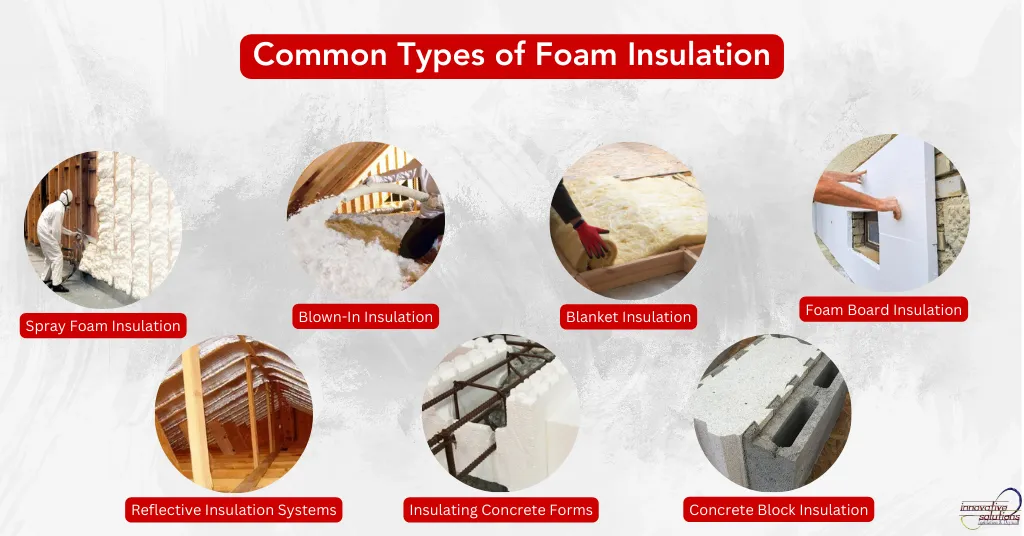
Blanket Insulation: Batts and Rolls
- Materials: Fiberglass, mineral (rock or slag) wool, plastic fibers, natural fibers.
- Applications: Used in unfinished walls (including foundation walls), floors, fitted between studs, joists, and beams.
- Advantages: Affordable and easy to install.
Concrete Block Insulation and Insulating Concrete Blocks
- Materials: Foam boards (polystyrene, polyisocyanurate, or polyurethane).
- Applications: Unfinished walls, foundation walls, new construction, or renovations.
- Advantages: Improves R-value by insulating cores, moderates indoor temperatures, and is ideal for energy-efficient new construction.
Foam Board or Rigid Foam
- Materials: Polystyrene, polyisocyanurate, polyurethane, phenolic.
- Applications: Used in unfinished walls, foundation walls, floors, and unvented low-slope roofs.
- Advantages: High insulation value with minimal thickness; blocks thermal short circuits.
Insulating Concrete Forms (ICFs)
- Materials: Foam boards or foam blocks.
- Applications: Foundation walls and other unfinished walls in new construction.
- Advantages: High thermal resistance as insulation is built into the walls.
Loose-Fill and Blown-In Insulation
- Materials: Cellulose, fiberglass, mineral (rock or slag) wool.
- Applications: Enclosed existing walls, open new wall cavities, unfinished attic floors, hard-to-reach places.
- Advantages: Ideal for irregular areas and around obstructions; good for retrofitting.
Reflective Insulation Systems
- Materials: Foil-faced kraft paper, plastic film, polyethylene bubbles, cardboard.
- Applications: Unfinished walls, ceilings, and floors.
- Advantages: Effective at reducing downward heat flow; performance depends on spacing and layers.
Rigid Fibrous or Fiber Insulation
- Materials: Fiberglass, mineral (rock or slag) wool.
- Applications: Ducts in unconditioned spaces or areas requiring heat-resistant insulation.
- Advantages: Withstands high temperatures.
Spray Foam and Foamed-in-Place Insulation
- Materials: Cementitious, phenolic, polyisocyanurate, polyurethane.
- Applications: Enclosed existing walls, and unfinished attic floors.
- Advantages: Seals air leaks, works in irregular areas, and adds insulation to finished spaces.
However, which type suits your needs requires an expert opinion. I can guide you about the best insulation installation methods and materials from our resources easily.
Contact us for our services because we are one of the most reliable insulation and drywall contractors in Denver, CO.
Potential Damage and Prevention of Drywall Ceiling by Foam Insulation
You already know that foam Insulation can improve energy efficiency easily. However, we now know the answer to ‘Can the ceiling of drywall get damaged by foam insulation’. An improper installation can cause a lot of damage to your drywall.
My advice would be to understand the severity of the damage and take safety measures.
This can help you ensure safe insulation according to the building science.
Looking for Drywall or Insulation Services in the Denver Area and Beyond?

How Foam Insulation Damages a Drywall
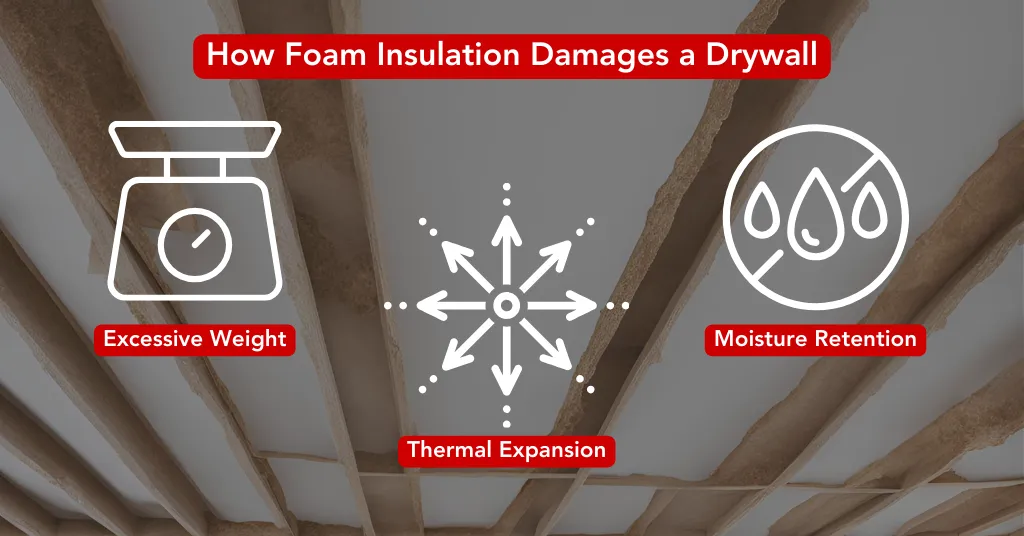
Moisture Retention
Foam insulation can trap moisture if proper ventilation or moisture control measures are not in place.
When moisture becomes trapped between the foam and drywall, it can weaken the material over time. This creates conditions for mold growth in the existing drywall.
High humidity or leaks in the roof can worsen this issue, especially if the insulation is blocking airflow.
Excessive Weight
Closed-cell spray insulation is heavier than other types of insulation.
Applying too much spray foam can put pressure, leading to sagging or cracks.
Thermal Expansion and Contraction
As insulation expands and cures, it can apply uneven pressure on the drywall.
The temperature changes can cause the foam to expand and contract. This stresses the drywall and causes structural issues.
Signs of Damage to Drywall
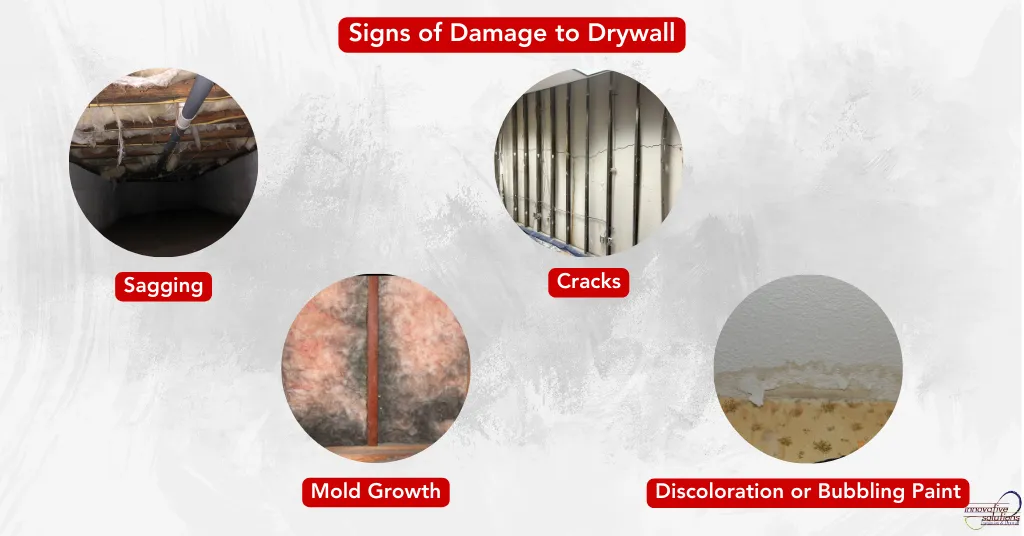
Sagging
A droop in the ceiling may show the drywall is under pressure from the insulation.
This is particularly common if the foam is over-applied or not distributed properly.
Cracks
Small hairline cracks or larger fractures in the drywall surface may appear due to uneven weight or thermal stress.
The cracks often form around corners of the drywall.
Mold Growth
Dark or greenish patches on the surface mean moisture retention. It is usually caused by poor ventilation.
Mold growth can spread quickly and damage the drywall further if not taken care of.
Discoloration or Bubbling Paint
Paint may bubble or peel because of the moisture.
Preventative Measures
Use Proper Installation Techniques
Apply insulation in controlled amounts to avoid overloading.
Make sure the foam is evenly distributed to lessen pressure points.
Ensure Adequate Ventilation
Maintain proper airflow in the ceiling cavity to prevent moisture buildup.
Install ventilation systems that do not have an obstruction in between.
Incorporate Moisture Control Measures
Use a moisture-resistant spray in areas that might get damped.
Inspect the roof for leaks before installing insulation.
Choose the Suitable Insulation Type
For ceilings, lightweight options like open-cell spray foam insulation are less likely to strain drywall compared to denser closed-cell foam.
Consult a professional to select the best insulation type for your roof project.
Allow for Expansion
When applying for insulation, give it room to expand without pressing against the drywall too forcefully.
Follow manufacturer guidelines for application thickness and curing time.
You can easily remove the doubts of ‘Can the ceiling of drywall get damaged by foam insulation’ by having a better understanding of how to maintain your drywall and ways to prevent damage.
Alternatively, you can give us a call for an expert opinion.
Comparison of Foam Insulation with Other Insulation Materials
The global spray foam market is expected to grow over 6.2% annually until 2032 due to the rising demand for energy-efficient insulation.
Let’s look at a comparison between foam insulation and traditional insulation material.
[wpdatatable id=49]
How Do You Repair Drywall Damage Caused by Foam Insulation?
- Fix the root cause: You’ll need to address moisture issues or incorrect foam application. Make sure a proper vapor layer is present to prevent further problems.
- Repair minor damage: I would advise using drywall compound and tape to fill cracks or repair sagging areas. Then sand and repaint for a smooth finish.
- Replace major damage: For severe issues, remove the damaged drywall. Inspect and correct the insulation, and then reinstall the new drywall safely.
These steps will lead to a durable repair and reduce the risk of future damage.
People Also Ask
Can You Put Foam Insulation Over Drywall?
Yes, foam insulation can be applied over drywall, but proper techniques must be followed to prevent uneven pressure, moisture buildup, or damage like sagging and cracks.
Is Foam Insulation Good for Ceilings?
Foam insulation is effective for ceilings as it provides high thermal resistance and seals gaps. However, lightweight options like open-cell foam are better to avoid pressure on drywall.
Can You Insulate a Ceiling After Drywall?
Yes, ceilings can be insulated after drywall installation. Blown-in or spray foam insulation works well, but professional installation ensures even distribution and minimizes damage risks.
What Is the Downside of Foam Insulation?
The main downsides of foam insulation are its high cost, potential for moisture retention, and the risk of drywall damage if applied improperly or without proper ventilation.
How Can Foam Insulation Damage Drywall?
Foam insulation can damage drywall through moisture retention, excessive weight, or thermal expansion, leading to sagging, cracks, or mold growth if not properly installed or ventilated.
By now, you must have gotten the answer to the question, ‘Can the ceiling of drywall get damaged by foam insulation’. Opting for a suitable type of insulation is very important for energy efficiency and a comfortable living space.