
If you are wondering, “Is drywall flammable?” The answer is No. The drywall is not flammable. It does not catch fire easily because it has a gypsum core containing water. When exposed to heat, the water in the gypsum slows down the spread of fire (fire-resistant property).
According to the National Fire Protection Association (NFPA), regular drywall can resist fire for 30 to 60 minutes, depending on its thickness. However, the paper covering on drywall can burn if exposed to high heat for a long time.
What Is Drywall?
Standard drywall, also known as gypsum board or plasterboard, is a widely used building material made from a gypsum core sandwiched between layers of paper. It is known for being lightweight, very easy to install, and cost-effective.
Uses of Drywall in Construction
- Interior Walls and Ceilings: Drywall is the standard material for finishing walls and ceilings in homes, offices, and commercial buildings.
- Fire-Resistant Barriers: Fire-resistant drywall, such as Type X or Type C, helps slow fire spread. This makes it a good use in garages, stairwells, and shared walls in apartments.
- Soundproofing: Special drywall, such as acoustic drywall helps reduce noise transmission. It also improves privacy and comfort in homes and offices.
- Moisture and Mold Resistance: Greenboard and cement board are types of drywall designed for bathrooms, kitchens, and basements. These are the places most likely to get moisture.
- Decorative Features: Drywall is also used for false ceilings, archways, and built-in shelves. They offer a smooth surface for painting and decorating.
Drywall’s affordability and versatility make it a top choice in modern construction projects. If you are looking for the best drywall contractor in Denver, then we are the perfect choice for you.
Innovative Solutions has completed multiple projects, delivering high-quality results that exceed our client expectations. So contact us for our services.
Composition of Drywall (What Makes It Fire-Resistant?)
Standard drywall is a widely used building material made from gypsum plaster. It is a quicker and more cost-effective alternative to traditional plaster walls.
[wpdatatable id=54]
Fire Resistance of Drywall (How Drywall Prevents Fires)
Drywall is made fire-resistant by adding special materials to its gypsum core. Type X drywall has glass fibers mixed in during manufacturing. Even better is a Type C drywall designed to be fire resistant.
These fibers make the board stronger, helping it stay together when exposed to fire. As the gypsum heats up, it releases water as steam, which cools the surface and slows down the fire. This gives people more time to escape and reduces damage.
Fire-rated drywall assemblies are evaluated using ASTM E119, the Standard Test Methods for Fire Tests of Building Construction and Materials. To pass this test, the drywall must meet the following criteria:
- The average temperature increase of all thermocouples must not exceed 250°F above ambient temperature.
- No single thermocouple can record a temperature increase of more than 325°F above ambient.
- The wall assembly must tolerate a high-pressure hose stream test without penetration or failure.
- There should be no visible burn-through to the other side of the wall.
- The structure must remain stable and not collapse under fire conditions.
Looking for Drywall or Insulation Services in the Denver Area and Beyond?

These fire rating standards ensure that drywall provides effective fire protection and is suitable for your household. That is how you know your drywall is fire-resistant.
Types of Drywall
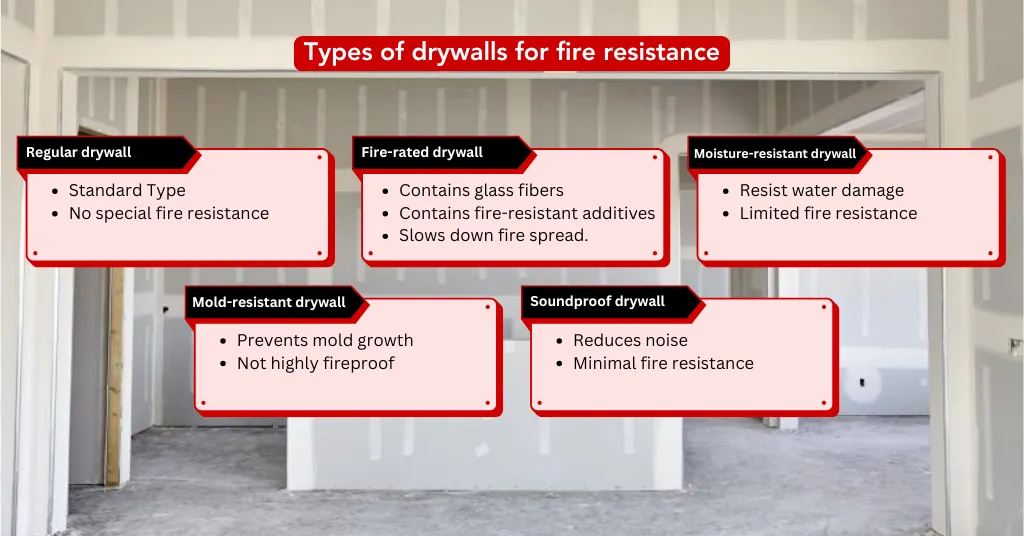
Drywall comes in various types, each designed for specific needs.
- Regular drywall is the standard type but offers no special fire resistance.
- Fire-rated drywall (Type X and Type C) contains glass fibers and fire-resistant additives, slowing down fire spread.
- Moisture-resistant drywall (Green Board) resists water damage but has limited fire resistance.
- Mold-resistant drywall (Purple Board) prevents mold growth but is not highly fireproof. Cement board is water-resistant and durable but not inherently fireproof.
- Soundproof drywall reduces noise but offers minimal fire resistance unless specially designed.
- fire-rated drywall is the best option in buildings for fire safety.
You can get to know more about different texture types of drywall easily. You must choose what you think will be the most comfortable for your house and fulfill your comfort needs.
Safety Concerns When Using Drywall
Even after knowing the answer to ‘Is drywall flammable”, there are some safety concerns that must be considered during installation and use. Drywall dust that is generated from cutting, sanding, or demolition has harmful particles. That includes formaldehyde, acetaldehyde, and crystalline silica.
If a person inhales it for very long, it can cause respiratory issues, eye irritation, and long-term lung damage. To minimize risks, workers should wear dust masks, use proper ventilation, and follow safety protocols when handling drywall.
Another major concern is the toxicity of imported drywall. Some imported drywalls contain strontium sulfide and sulfur compounds. This can lead to corrosion of electrical wiring and plumbing and also emits a strong sulfur smell.
This is why it is important to have quality checks to make sure that drywall remains a durable material in your house construction.
People Also Ask
Does Drywall Catch on Fire Easily?
v-No, drywall does not catch fire easily. Its gypsum core contains water, which slows fire spread. However, the paper covering can burn when exposed to high heat for an extended period.
At What Temperature Will Drywall Ignite?
The drywall itself does not ignite easily, but the paper facing can burn at around 451°F (233°C). The gypsum core resists fire due to its water content, which releases steam when heated.
Is Drywall Considered Flammable?
No, drywall is not considered flammable. Its fire-resistant gypsum core prevents it from catching fire easily. Fire-rated drywall, like Type X or Type C, enhances fire resistance with added glass fibers.
Is the Paper on Drywall Flammable?
Yes, the drywall paper is flammable. It can ignite when exposed to high temperatures, but the gypsum core behind it slows the spread of fire, making drywall a fire-resistant material.
What Type of Drywall Is Most Fire-Resistant?
Type X and Type C drywall are the most fire-resistant. They contain glass fibers and fire-resistant additives, allowing them to withstand fire longer than standard drywall, making them ideal for fire-rated walls.
Now that you are clear on ‘Is drywall flammable’, it is equally important to follow proper installation and adhere to safety guidelines to ensure that your drywall remains fire-resistant.