
As a home insulation expert with over 20 years in the field, I’ve seen many homeowners face some recurring issues: wasted energy, high bills, and uncomfortable rooms due to improper insulation. A common question is, “Should I insulate my basement ceiling?”
You might not realize it, but neglecting your basement ceiling can lead to major energy loss, moisture problems, and even unwanted noise creeping into your living space.
Imagine paying for heating and cooling that escapes through uninsulated surfaces—a hidden drain on your comfort and budget.
But there’s good news: insulating your basement ceiling can dramatically reduce your energy bills, reduce humidity, and create a quieter, cozier atmosphere.
If you’re serious about saving money and improving comfort, insulation is a smart investment. Read on to learn how you can transform your basement and the entire home environment by insulating the ceiling.
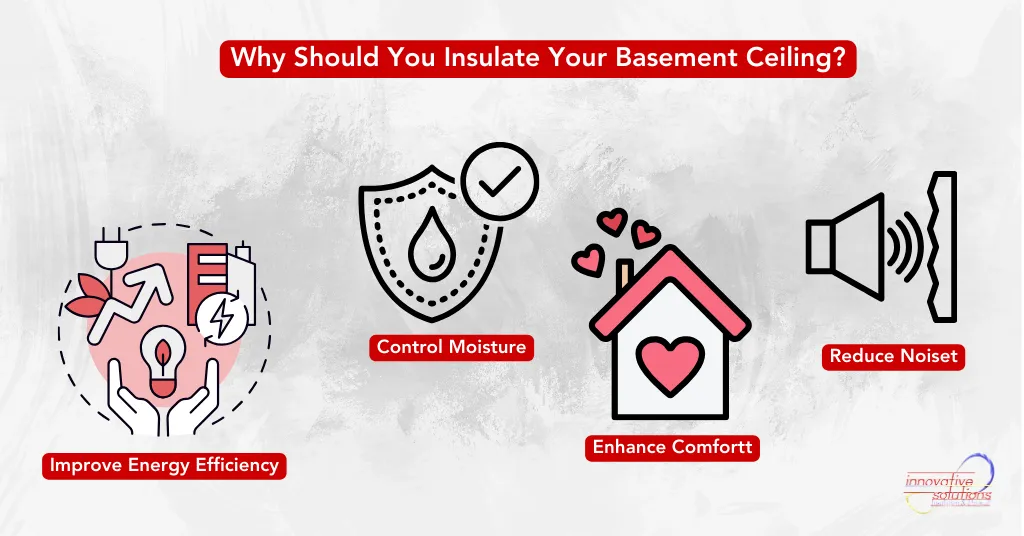
Why Should You Insulate Your Basement Ceiling?
Think of insulation as a cozy blanket for your home. It traps heat during the winter and keeps it out during the summer. When it comes to home improvement, basement insulation often takes a backseat.
Let me tell you about the key reasons to consider insulation. Insulating your basement ceiling will help you:
[wpdatatable id=38]
There are plenty of reasons why you should insulate your basement ceiling. But let’s dive deeper into the details.
How Insulation Boosts Energy Efficiency
One of the most compelling reasons to insulate your basement ceiling is energy efficiency. By insulating the roof, you can significantly reduce heating and cooling costs.
According to the U.S. Department of Energy, up to 30% of a home’s energy can be lost through gaps in insulation.
This means your HVAC system doesn’t have to work as hard, leading to lower energy bills.
So if you’re asking, “Should I insulate my basement ceiling?” the answer is yes—especially if you want to cut down on those monthly bills.
Homeowners can save an average of $250 to $450 per year on energy costs by properly insulating their basements.
Moisture Control
One of the lesser-known benefits of insulating your basement ceiling is moisture control. Basements are prone to moisture problems due to their proximity to the ground. This moisture can lead to several issues, including mold growth, mildew, and structural damage.
Here’s where the magic of insulation comes in again! By adding a layer of insulation, you create a thermal barrier that prevents warm air from inside your home from coming into contact with the cooler basement ceiling.
This, in turn, reduces condensation, which is the culprit behind those pesky moisture problems. Especially If you’re in an area like Denver, where temperatures can fluctuate, moisture control becomes even more essential.
Comfort Improvement
Let’s be honest, a chilly basement isn’t exactly an inviting space. Who wants to spend time in a place that feels like a walk-in refrigerator?
By insulating your basement ceiling, you can create a more consistent and comfortable temperature throughout your entire home.
Noise Reduction
Uninsulated basements can be quite irritating. The creaking of floorboards, the hum of appliances, and even the sound of your kids playing downstairs can easily travel throughout your house.
But guess what? Insulation acts as a sound barrier too! By adding a layer of insulation to your basement ceiling, you can significantly reduce noise transmission between floors.
So, if you find yourself asking, “Should I insulate my basement ceiling?” for the sake of peace, the answer is a resounding yes.
Looking for Drywall or Insulation Services in the Denver Area and Beyond?
Types of Insulation for Your Basement Ceiling
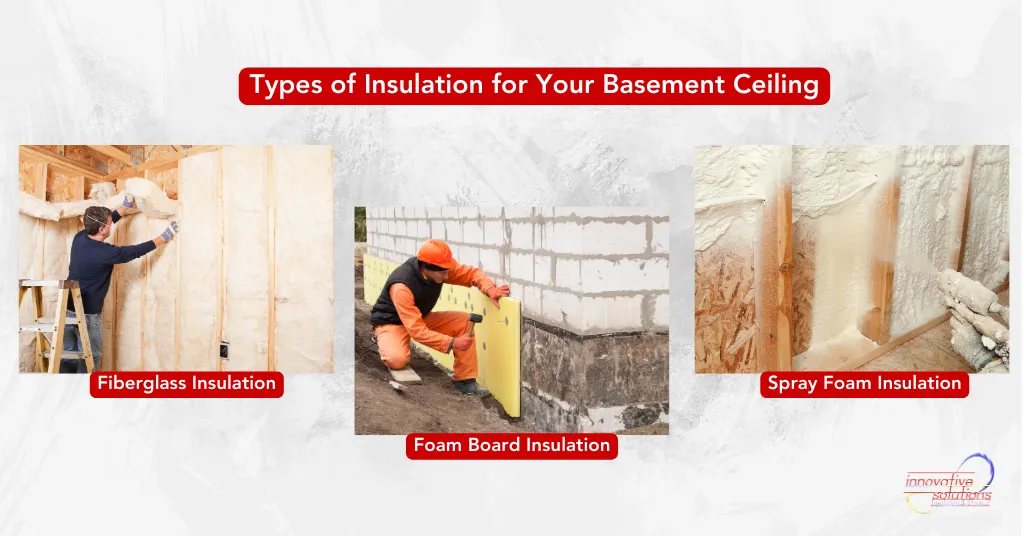
When choosing the right type of insulation, you have a few options, like fiberglass, foam board, and spray foam insulation. Each type has pros and cons depending on your specific needs and budget. Here’s a quick overview:
[wpdatatable id=39]
If stuck between making the right choice, consider consulting with a professional. The right insulation will depend on your specific needs, climate, and how much you’re willing to invest.
Consider the R-value recommended for your climate zone. A higher R-value means better insulation.
Building Codes and Regulations
Before you start, it’s important to check your local building codes. Some regions require certain types of insulation for basements, especially in areas prone to extreme weather. This can also affect the thickness and type of insulation you’ll need.
Make sure to do your research or consult with a contractor who is familiar with your local building codes. This step is crucial in ensuring that your project is up to standard and doesn’t violate any regulations.
Comparative Analysis Between Basement Insulation and Other House Areas
[wpdatatable id=40]
Is Insulating My Basement Ceiling Worth the Investment?
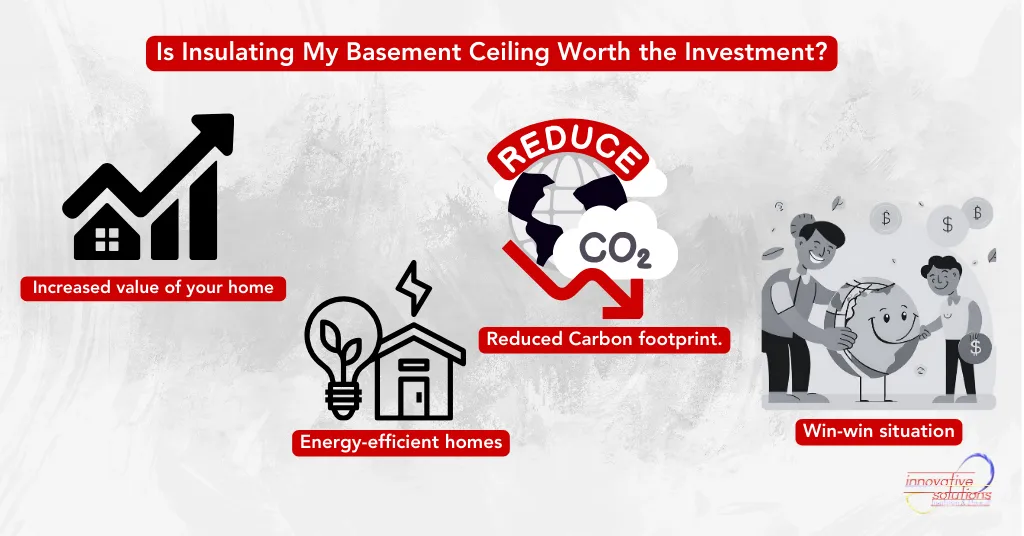
Now, let’s talk about the long-term benefits. Insulating your basement ceiling is not just about saving money on your utility bills. It can also increase the overall value of your home.
Buyers are often willing to pay more for energy-efficient homes, especially as more people become eco-conscious.
Insulation minimizes the energy required to heat or cool your home, reducing your carbon footprint.
That’s a win-win situation for both your wallet and the planet.
People Also Ask
Does a Basement Ceiling Need to Be Insulated?
Yes, insulating a basement ceiling is beneficial. It improves energy efficiency, regulates temperature, reduces moisture, and minimizes noise, making the entire home more comfortable and cost-effective.
Are You Supposed to Insulate a Basement?
Yes, insulating your basement, especially the ceiling, enhances comfort, prevents moisture issues, saves on energy costs, and offers soundproofing benefits between floors for a quieter living space.
What Is the Cheapest Way to Insulate a Basement Ceiling?
Fiberglass insulation is generally the most affordable option. It’s easy to install, widely available, and provides good temperature regulation, although it’s less effective for moisture control.
Is a Vapor Barrier Necessary in a Basement Ceiling?
A vapor barrier can be necessary for basement ceilings to control moisture and prevent mold. This is especially important in areas with fluctuating temperatures, where condensation can cause issues.
Should I Insulate My Basement Ceiling in Denver?
Yes, insulating a basement ceiling in Denver is recommended. It helps regulate indoor temperature, reduces energy costs, and prevents moisture problems common in Denver’s variable climate.
At the end of the day, the question of whether should I insulate my basement ceiling nags you around. The decision to insulate your basement ceiling comes down to your needs and goals.
If you’re looking for improved energy efficiency, better moisture control, enhanced comfort, and reduced noise, the answer is clear: You should insulate your basement ceiling.
Not only will you save money in the long run, but you’ll also make your home a more comfortable and quiet place to live.
Plus, you will play your part in the environment by reducing energy consumption.
For more information on the types of insulation available and how to get started, contact ISID for an expert guide.