
Do you also want to know what is batt insulation in detail? Well, you are at the right place. Batt is a type of thermal insulation made from pre-cut flexible sheets or rolls of fibrous material.
Batt insulation fills spaces between walls, floors, and ceilings to keep your home warm in winter and cool in summer by preventing heat from passing through. Some batt insulation has a paper or foil layer to block moisture.
Batt insulation is easy to install and helps save energy while reducing noise between rooms. It is a common and affordable choice for improving comfort in buildings.
Due to the fluctuating climate, batt insulation in Denver is quite popular. Its affordability and effectiveness make it popular for insulating walls, attics, and floors.
Types of Batt Insulation
Batt insulation comes in various types. Every type is suited for specific needs and applications. Below are the common types of batt insulation and their properties:
[wpdatatable id=51]
R-Value of Batt Insulation
Batt insulation in Denver is important for maintaining energy efficiency in buildings. Its performance is determined by the R-value, which measures thermal resistance.
Higher R-values show better insulation, as it slows down heat transfer. The R-value required for a home depends on the climate. Colder areas like Denver often need higher values to ensure maximum energy efficiency, and knowing what is batt insulation can give you an upper hand to make a safe decision for your house.
In Denver, the required R-value for insulation is 49 and above. However, it also depends on the local climate and building codes. They account for the city’s cold winters and warm summers. Here are some typical R-value recommendations for Denver based on the International Energy Conservation Code (IECC):
- Attics: R-38 to R-49 (higher values help in extreme cold).
- Walls: R-13 to R-21 (depending on construction type).
- Floors: R-25 to R-30 (to prevent heat loss to unheated spaces like basements or crawlspaces).
- Basements and Crawlspaces: R-11 to R-19 for walls and R-25 for floors.
Knowing about these values helps save energy, lower your heating and cooling costs, and make homes more comfortable. To meet Denver’s building rules and get the best insulation, it’s a good idea to know a good Insulation company like ours.
Through Innovative Solutions, from initial consultation to project completion, our highly skilled and professional team ensures exceptional results for every service we offer.
Looking for Drywall or Insulation Services in the Denver Area and Beyond?
Advantages of Batt Insulation
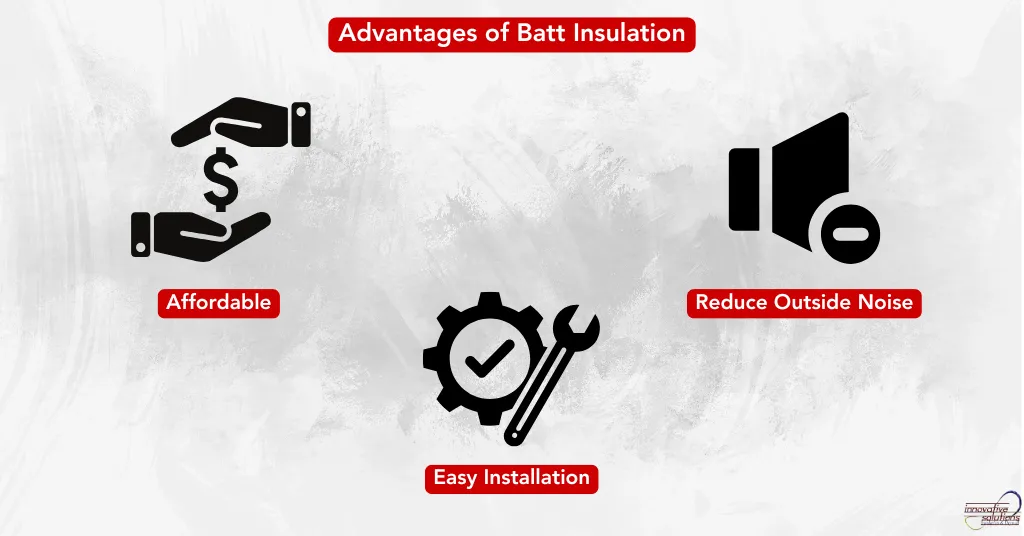
- It is affordable compared to other insulation types, making it a budget-friendly option for homeowners.
- It is simple to cut and fit.
- It reduces noise transmission between rooms, improving indoor comfort.
- It is available in various materials (fiberglass, mineral wool, cotton) to suit different needs.
- It effectively maintains indoor temperatures, reducing heating and cooling costs.
- Many types resist mold and mildew, enhancing durability and air quality.
- It includes materials made from recycled or sustainable resources that contribute to greener construction.
Moreover, batt insulation in Denver is becoming more environmentally friendly. Materials like recycled cotton and mineral wool are great for eco-friendly construction.
Some products, certified by organizations like the U.S. Green Building Council (USGBC) or ENERGY STAR, are made with recycled materials to reduce their impact on the environment.
Fiberglass insulation, for example, can often be recycled and is partly made from recycled glass. It helps to reduce waste and save resources.
Installation Process for Batt Insulation
Knowing what is batt insulation is good but knowing how to install batt insulation is even better.
- Preparation:
- Measure the spaces between studs, joists, or rafters for a good fit.
- Gather tools like a utility knife, measuring tape, and staple gun.
- Safety:
- Wear gloves, long sleeves, safety glasses, and a dust mask to avoid irritation.
- Make sure the area is well-ventilated.
- Cutting the Insulation:
- Cut the insulation to fit, leaving a small overhang.
- Use a utility knife and a straight edge for clean cuts.
- Placing the Insulation:
- Gently fit the insulation into place without compressing it.
- If it has a vapor barrier, place it facing the heated side.
- Securing the Insulation:
- Use a staple gun to attach the insulation to the wooden studs or rafters.
- For unfaced insulation, use friction or hangers to hold it.
- Finishing:
- Check for any gaps and fill them.
- Clean up any loose fibers or debris.
These steps help us to install insulation safely and effectively, improving energy efficiency.
Common Mistakes to Avoid in Batt Insulation Installation
When installing batt insulation, homeowners and service providers often make these common mistakes:
- Improper fitting of the insulation.
- Incorrect vapor barrier placement in the insulation.
- Ignoring gaps between insulation pieces.
- Not sealing air leaks around windows, doors, or ducts.
People Also Ask
What Is the Difference Between Rolled and Batt Insulation?
Rolled insulation comes in continuous rolls for larger areas, while batt insulation is pre-cut into sheets for easy installation in specific spaces like walls, attics, and floors.
What Does Batt Stand for in Insulation?
Batt refers to pre-cut sections of flexible insulation, typically made from materials like fiberglass, mineral wool, or cotton, designed to fit between wall studs, ceiling joists, or floor beams.
Which Is Better: Batt or Blown Insulation?
Batt insulation is better for DIY projects due to easy installation, while blown insulation is ideal for filling irregular spaces. The choice depends on the area and specific insulation needs.
Where Is Batt Insulation Used?
Batt insulation is commonly used in walls, attics, floors, and ceilings. It provides thermal insulation, noise reduction, and energy efficiency in both residential and commercial buildings.
What Are the Benefits of Batt Insulation?
Batt insulation is affordable, easy to install, reduces energy costs, minimizes noise, and improves indoor comfort. It’s available in eco-friendly options like recycled cotton and offers various materials to suit diverse needs.
To maintain the effectiveness of batt insulation, it is recommended to regularly inspect attics, walls, and floors for damage. Also make sure to check for moisture, as Denver’s cold winters can lead to mold or water issues.
By now, knowing what is batt insulation must give you a clear idea of its advantages and environmental aspects as well. By following the maintenance tips that we have shared, you can ensure your insulation continues to provide maximum performance and energy savings and have a cozy home.